Sumble: Solving the 'Data Dump' with Logic-First UX
series A
data heavy
b2b
The Challenge
GTM managers were overwhelmed by "noisy" data. They needed to identify high-intent leads within non-deterministic datasets, requiring a way to "steer" the data filtering without losing the big picture.
The Ask
This exercise involves taking a rapid first-pass at rethinking the view in the wider context of the application.
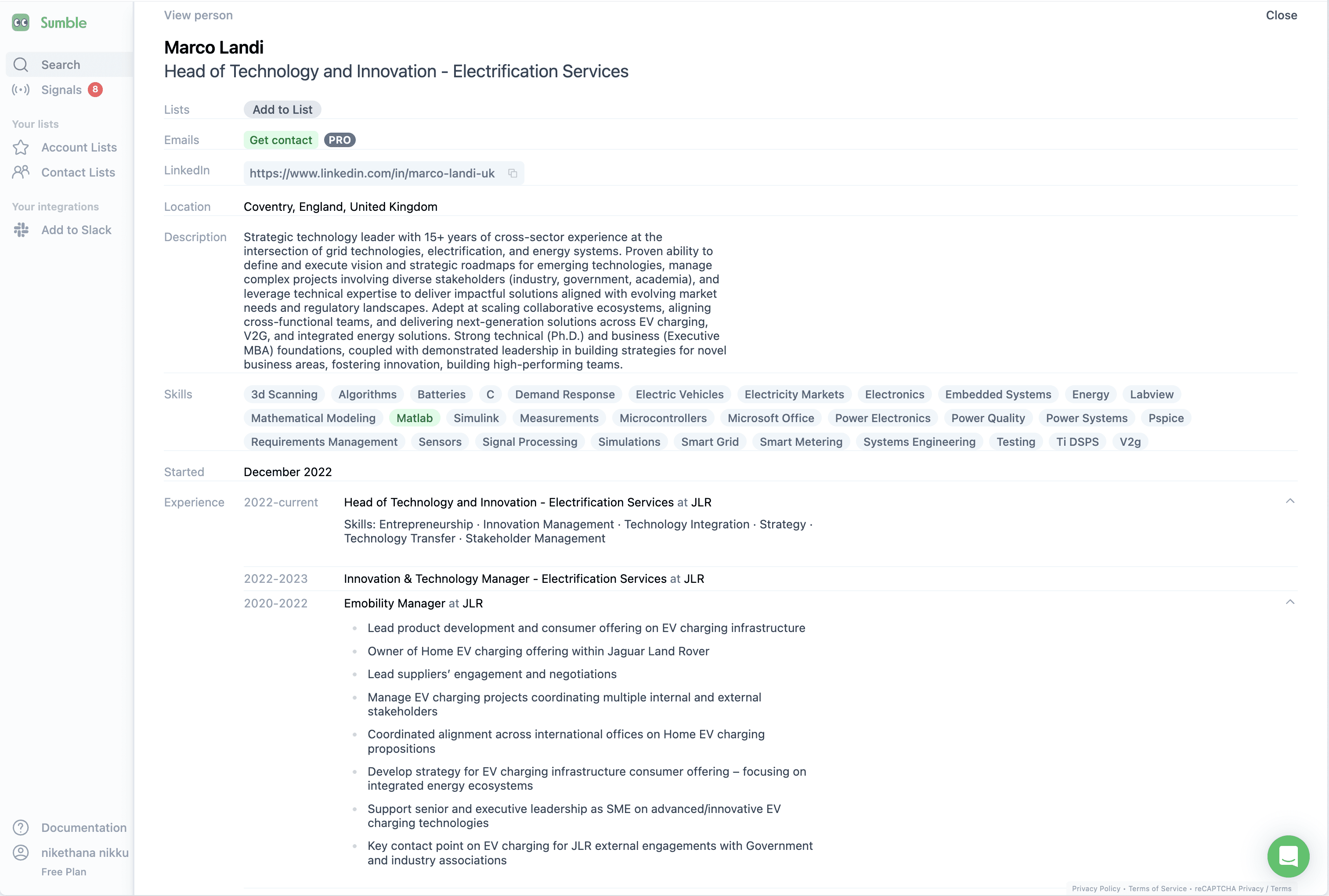
Fig: The screen I was asked to improve
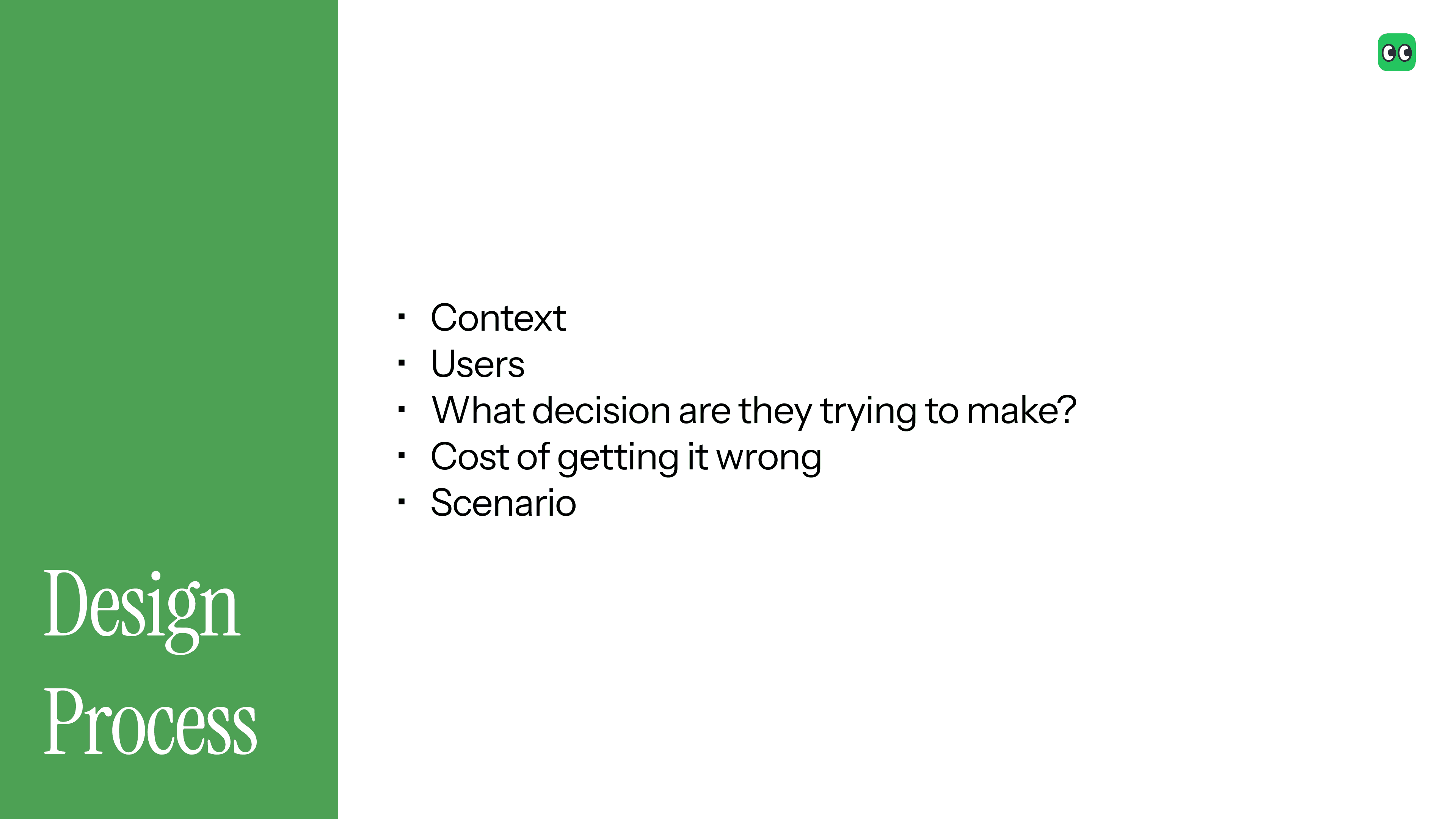
Fig: My process
mY DESIGN PROCESS
Scenario
A head of technology and innovation at Jaguar Land Rover. The user has arrived at the above page via a filter for the MATLAB technology.
What decision are they trying to make?
Is this the right MATLAB decision‑maker at JLR, and what should I do next?
QUESTIONS
Scope sharpening questions
Primary decision
What single first move should this page drive: qualify, or contact?
Right person + right time:
How is this defined in GTM terms, and which data proves it (role/seniority, tech mentions, recent hiring/posts, location, timing)?
CTA hierarchy:
Which action is primary and why: Contact, Add to List, Compose Message, Share?
Data variance:
How often is data sparse/fuzzy, and how should the UI degrade gracefully?
product auditing
Where is the current layout failing?
Before designing, I audited the existing platform to find where the view was failing the user.
Data Dump vs. Decision Tool: The original UI optimized for data volume rather than decision-making, forcing users to manually scan biographies to find relevance.
Layout Fragility: The existing design failed to degrade gracefully; sparse data profiles resulted in a broken user experience with no clear call-to-action.
The 'Recency' Blindspot: Vital GTM signals (recent hiring, MATLAB mentions) were buried, missing the 'Right Time' window critical for successful outreach.
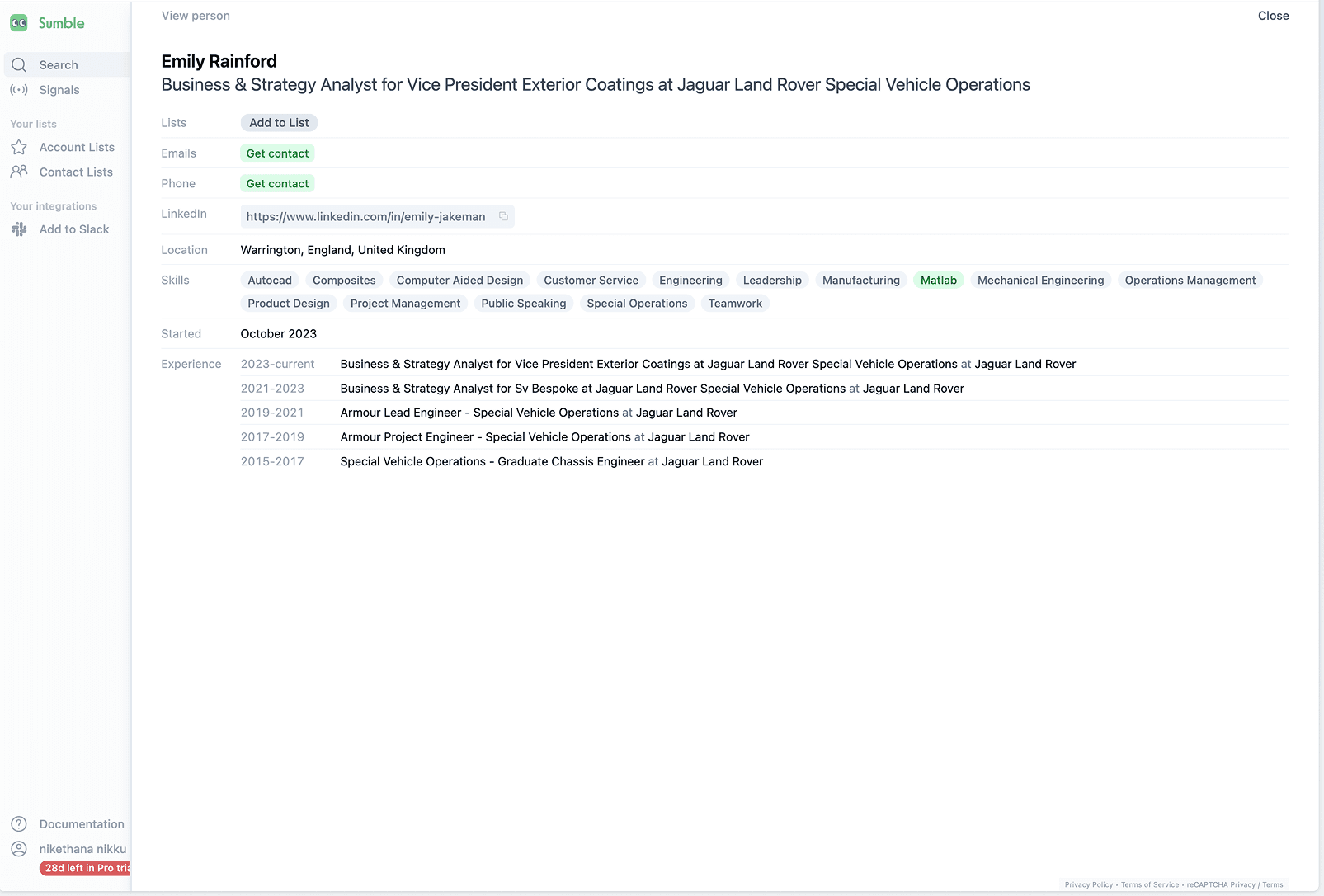
Fig: Example of sparse profile - to highlight inconsistency
PERSPECTIVE
Talking to GTM Users
GTM is a new field for me; to understand how agile they move, what is the volume the face and what are the active challenges in finding good leads, I talked to 2 users to get their perspective
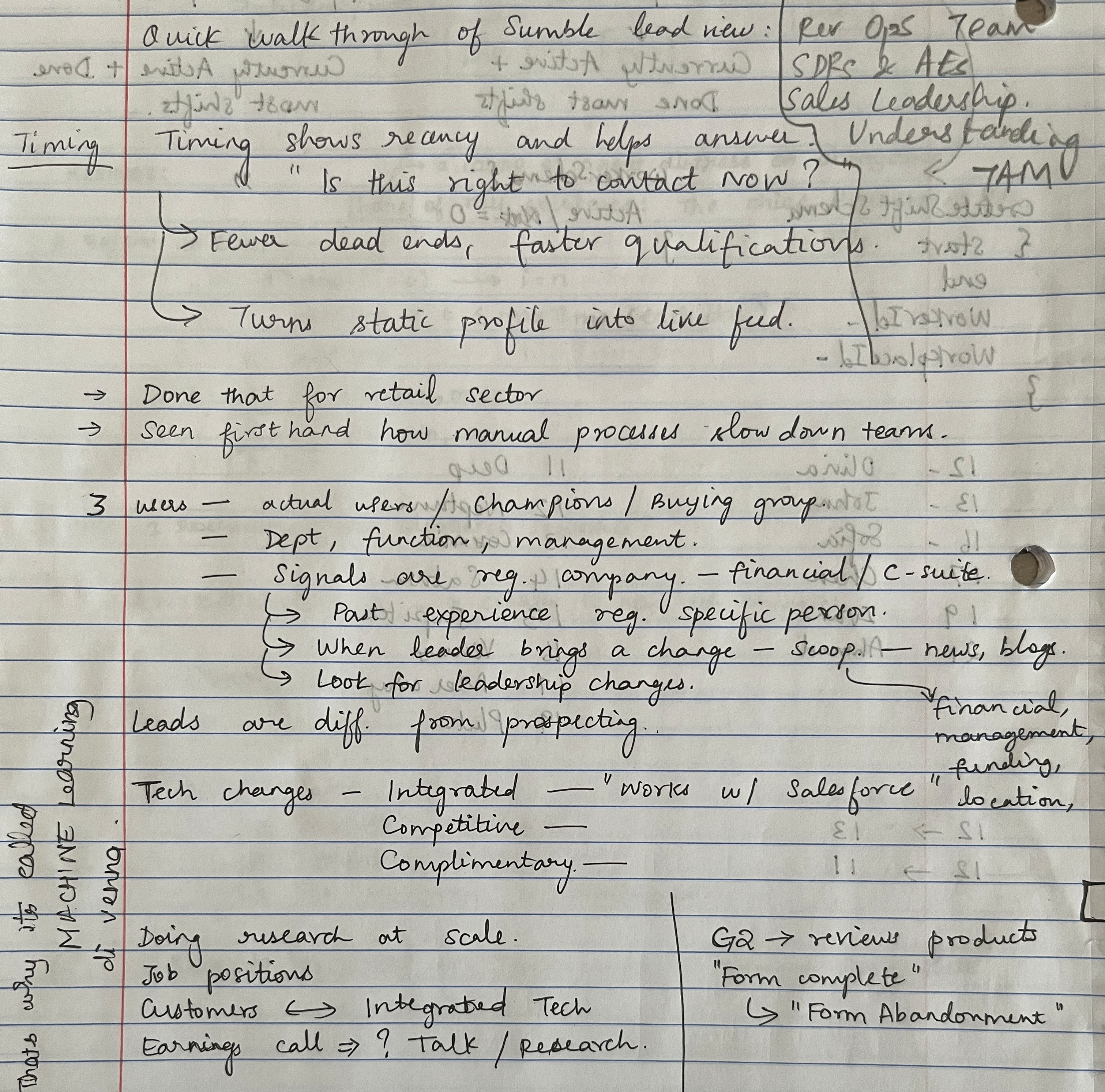
Fig: A snippet of user interview insight from 2 GTM folks
SOLUTION
Low fidelity solutions
The solution is aimed at
reducing cognitive load
reduce time-to-decision
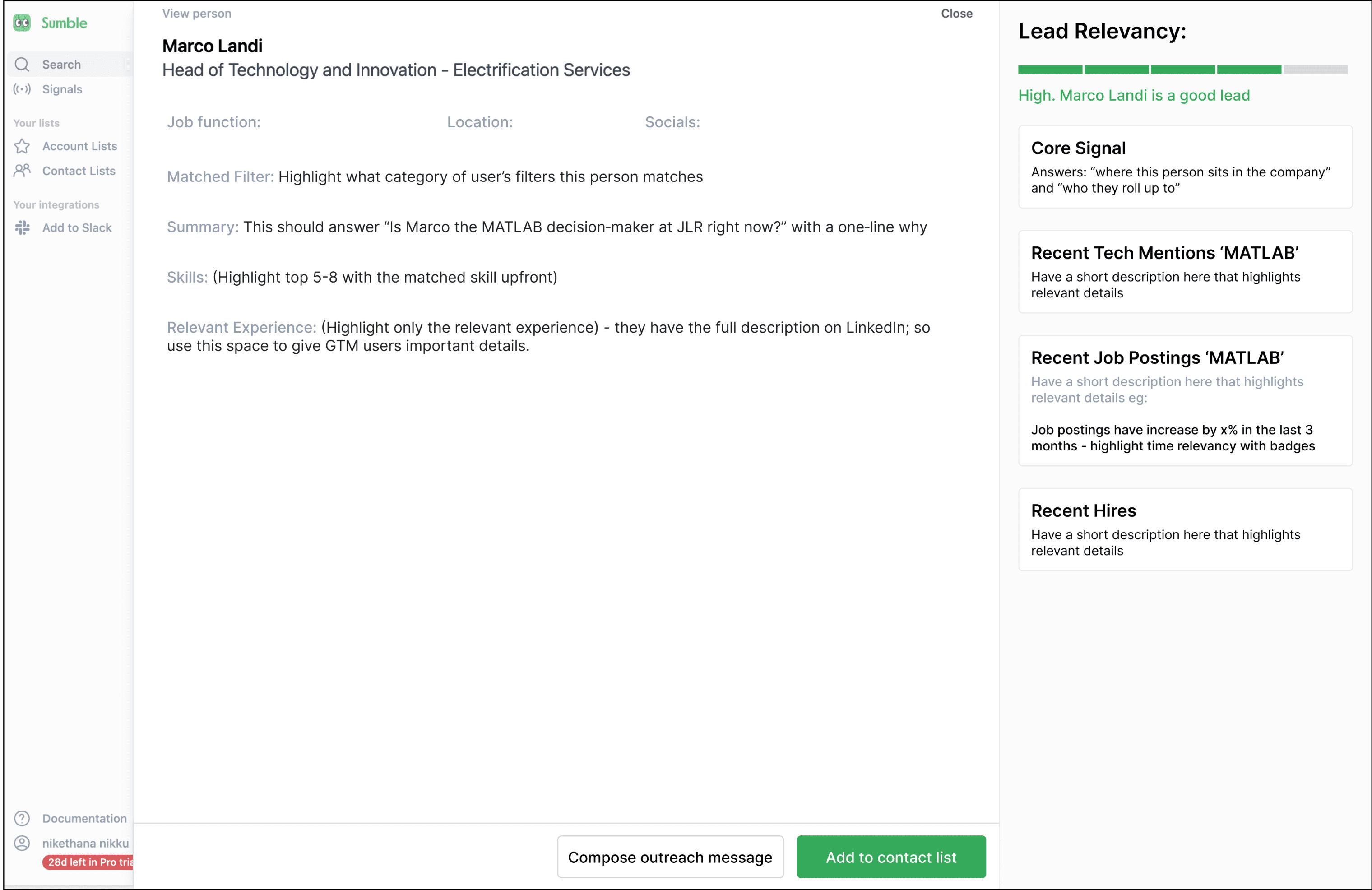
Fig: Rapid first-pass 1
SOLUTION
The Why behind my design decisions
My solution shifted the platform from a "profile viewer" to an agentic decision tool.
The "One-Line Why": Replaced dense biographical text with an AI-interpretable summary that answers the user’s primary question: "Is this the right decision-maker right now?".
Modular Extensibility: Engineered a component-based layout that prioritizes high information density regardless of data completeness, ensuring the UI remains functional for sparse profiles.
Recency Signal Architecture: Promoted "Timing" to a primary data dimension, using time-relevancy badges for tech mentions and hiring spikes to drive immediate action.
Actionable Hierarchy: Refactored the CTA logic to prioritize "Contact" and "List-building," aligning the UI with the user's high-velocity workflow.
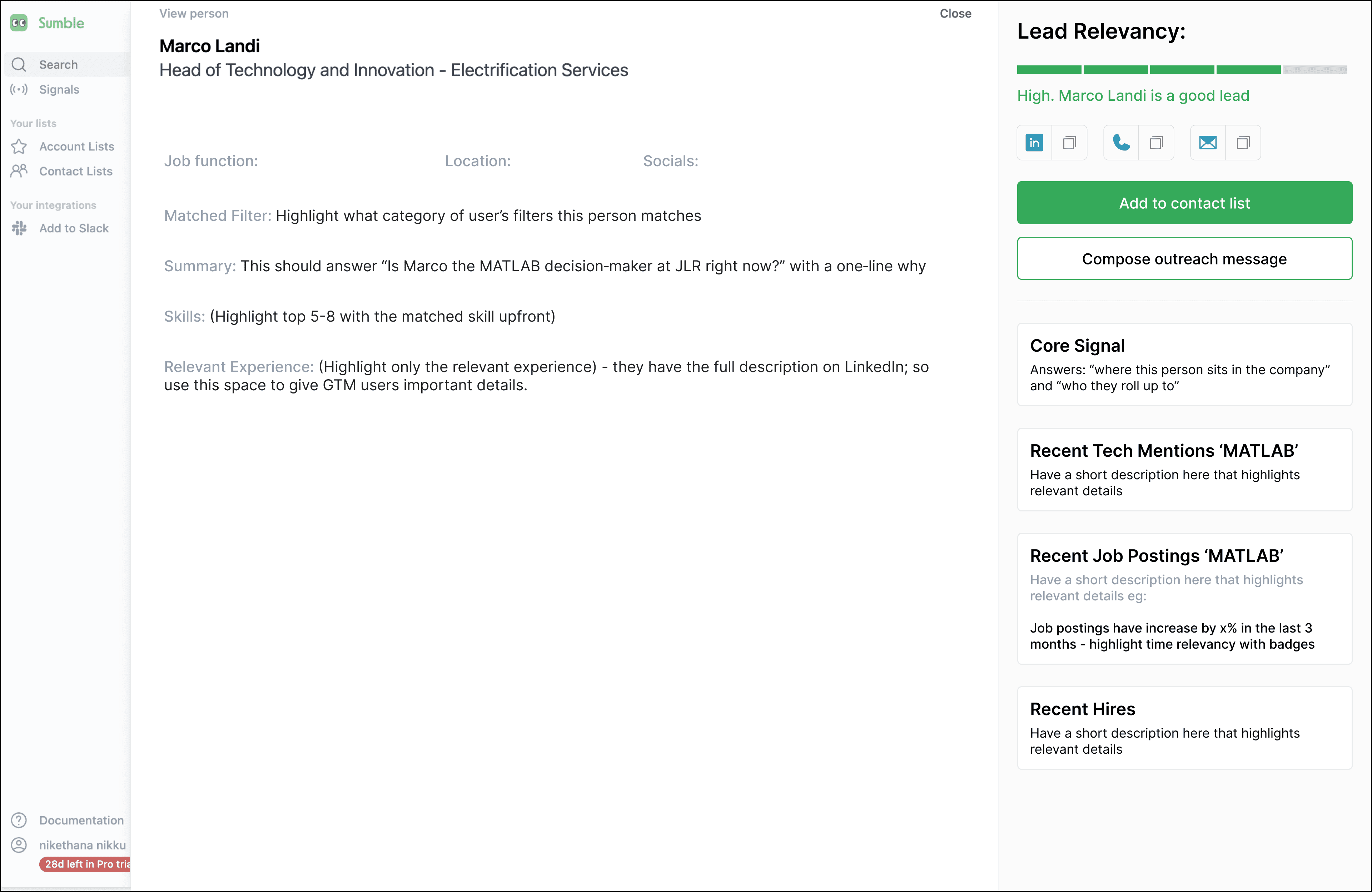
Fig: Rapid first-pass 2
Trade offs
Time vs. solution
To deliver a high-signal solution in 72 hours, I made two critical cuts to protect the core value proposition:
Deep vs. Wide User Segments: I intentionally ignored SDR and Marketing personas to solve exclusively for Sales Leadership. By narrowing the scope, I could obsess over the "One-liner Why" - the primary signal a leader needs to authorize outreach.
Logic over Analytics: I deprioritized historical outreach data to focus on real-time relevance. In GTM, the "Right Time" is often a transient signal (recent job posts, tech mentions ); I chose to build a robust UI for these "live" signals rather than a mediocre retrospective dashboard.
FUTURE
How I'd Improve If I had the time & Resources
Understand the different user segments and how success differs with each segment (RevOps, SDRs, AEs, Sales leadership, Marketing)
What signals have historically predicted successful outreach (for both precision and volume GTM workflows)?
How do GTM teams operationalize “right person + right time” today?
TESTING
How I'd evaluate the design
Measure lead qualification time and confidence rating after 10 profiles each.