(Work in progress) Designing Trust Into a Conversational AI
role
Product Designer
Collaborated with
Engineers, PM, Growth Officer
Timeline
Mar 2026 - Current
nDA Alert!
Mockups in this case study are illustrative — reimagined to protect NDA while preserving the design approach, decisions, and outcomes that drove the work.
Context
Charlie is an AI-powered personal assistant that acts as a privacy layer between the user and an external LLM. It intercepts and masks identifying data before any query leaves the product — so the model gets the context it needs to give a useful answer, without ever knowing who the user is. The initial focus is personal finance.
I joined mid-sprint into an already-running product. My scope was feature design and implementation, but it quickly expanded.

Fig: The gap
What started as feature design expanded to include driving product strategy and leading user research to answer a question the team hadn't fully stopped to ask: who is this actually for? In a B2B2C model, the enterprise buyer and the end user are different people — and I helped the team think more carefully about that gap
PROBLEM
How do you make privacy feel invisible?
The core tension: users want deeply personalized financial answers, but getting there requires handling sensitive data. Every security step is a moment where trust can break.
The design challenge was making that infrastructure disappear - so users feel supported, not surveilled.

Fig: Charlie disguising user data before sending to an LLM
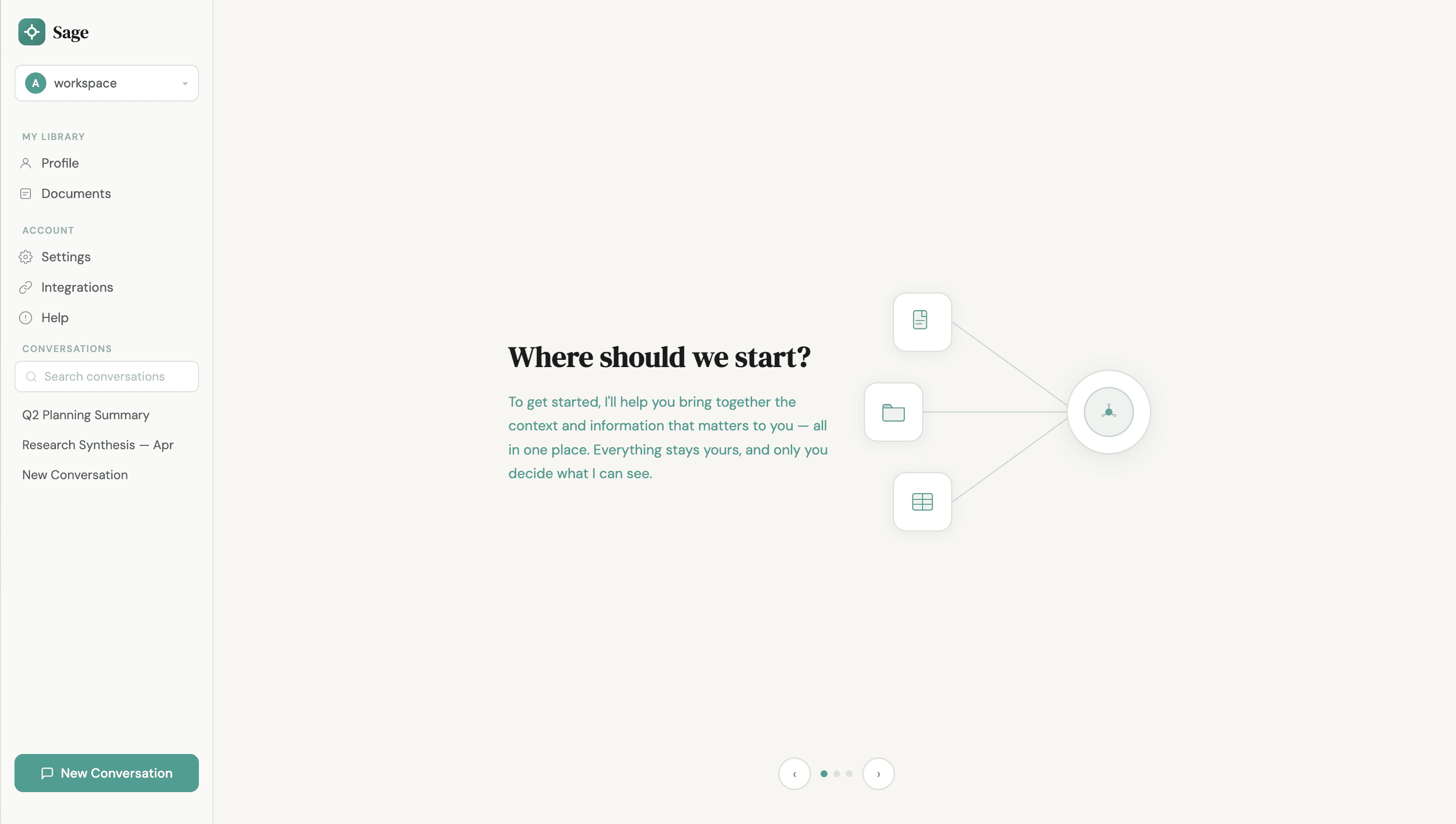
Fig: Charlie Onboarding - 1
DISCOVERY
Not waiting for a brief
Rather than waiting for a formal research mandate, I ran proactive unmoderated sessions to pressure-test early interaction patterns. The central question: where does security friction tip from acceptable to costly?
4 product strategy questions emerged from these sessions, which I brought directly to leadership and these became the foundation for the design roadmap.

Fig: Observations turned to strategic questions
DESIGN & ARCHITECTURE
Features that answered real questions
I moved fast by treating AI as a design-to-code partner - going from feature brief to functional prototype in 1-2 days. My focus was 4 modular pillars, each designed so privacy operates as invisible infrastructure:
Visualizing the Knowledge Graph: Translating a growing network of connected financial sources into an interface users can understand, manage, and audit at a glance.
Fig: Interactive knowledge graph - Illustrative only; original data and structure withheld under NDA

Fig: Different information sourced from user's: documents, chatting with Charlie, bank acc.
Frictionless Ingestion via Email Sync: A secure email-forwarding verification pipeline - frictionless enough that connecting a new source feels like a natural step, not a security checkpoint.
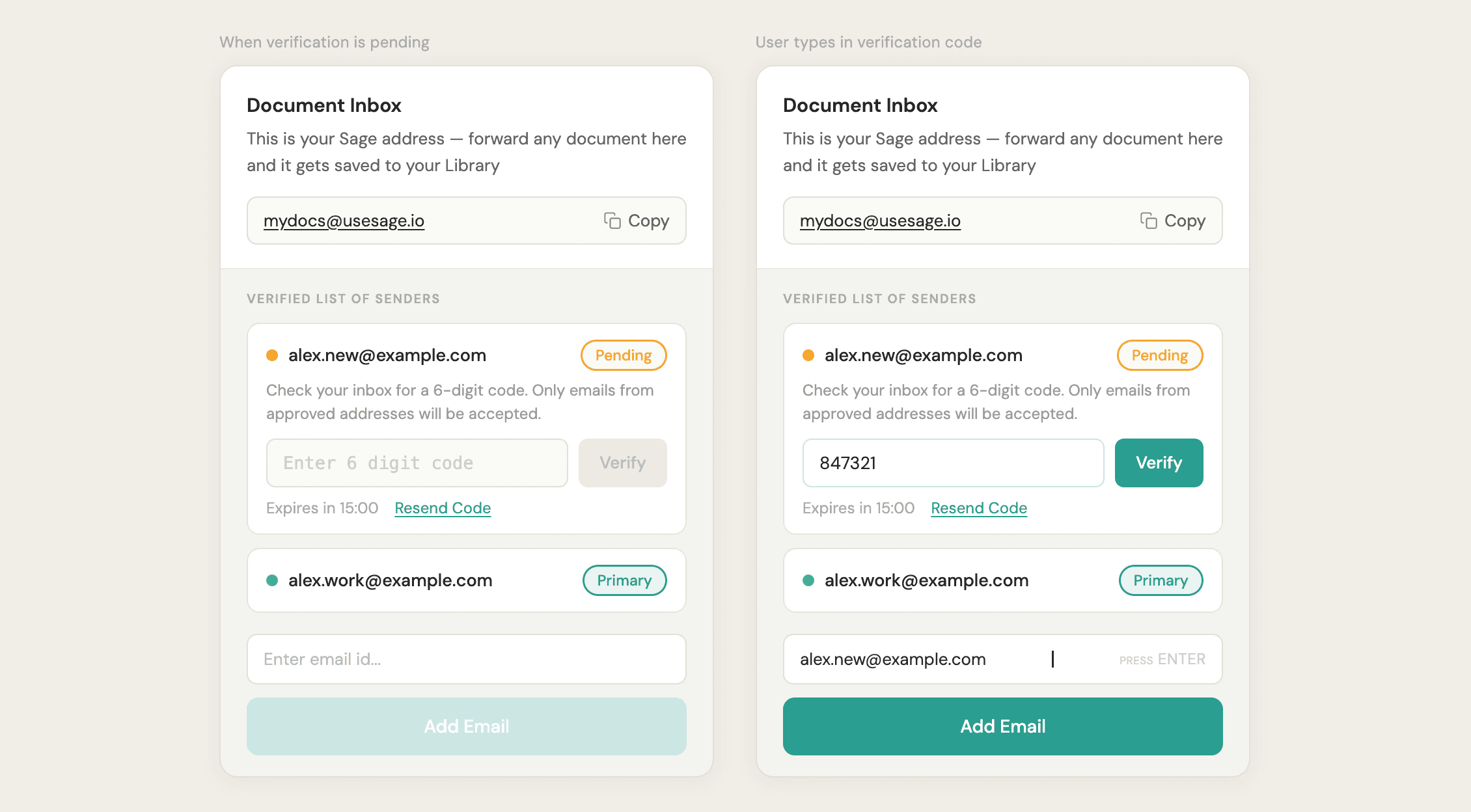
Fig: A way to connect through emails seamlessly
Local-First Voice Architecture: Local-first voice architecture with browser permission flows and a transcription pipeline designed so audio stays protected on-device.
Autonomous Task Execution: A structured task-scheduling modal that lets users set up persistent financial check-ins in plain English - no configuration overhead.

Fig: Tasks to run on recurrence

Fig: Tasks to run on recurrence
TESTING
Four User sessions. One thread.
I ran four moderated evaluation sessions across mobile and desktop, focused specifically on the Data Package Review component — the moment where users decide what context to share before a query goes out. Sessions surfaced clear friction points around the masking interaction that directly informed the v2 direction.
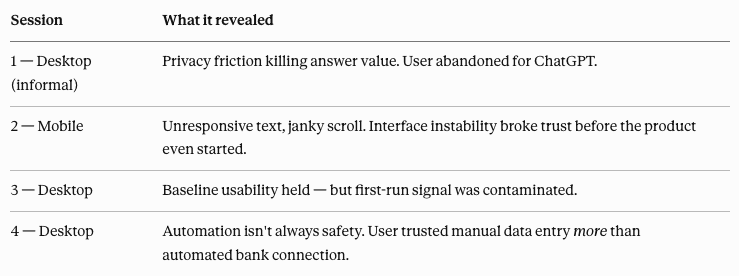
Fig: Brief insights
IMPACT
Strategic Outcomes
The user research, rapid prototyping, and interaction framework I built didn't just produce screens — they shaped what got built next. The work fed directly into the product roadmap, the formal testing strategy, and the enterprise narrative presented to institutional stakeholders.
Charlie is being positioned for a closed-to-institutional launch. The design system I established gives the team a foundation to scale it.
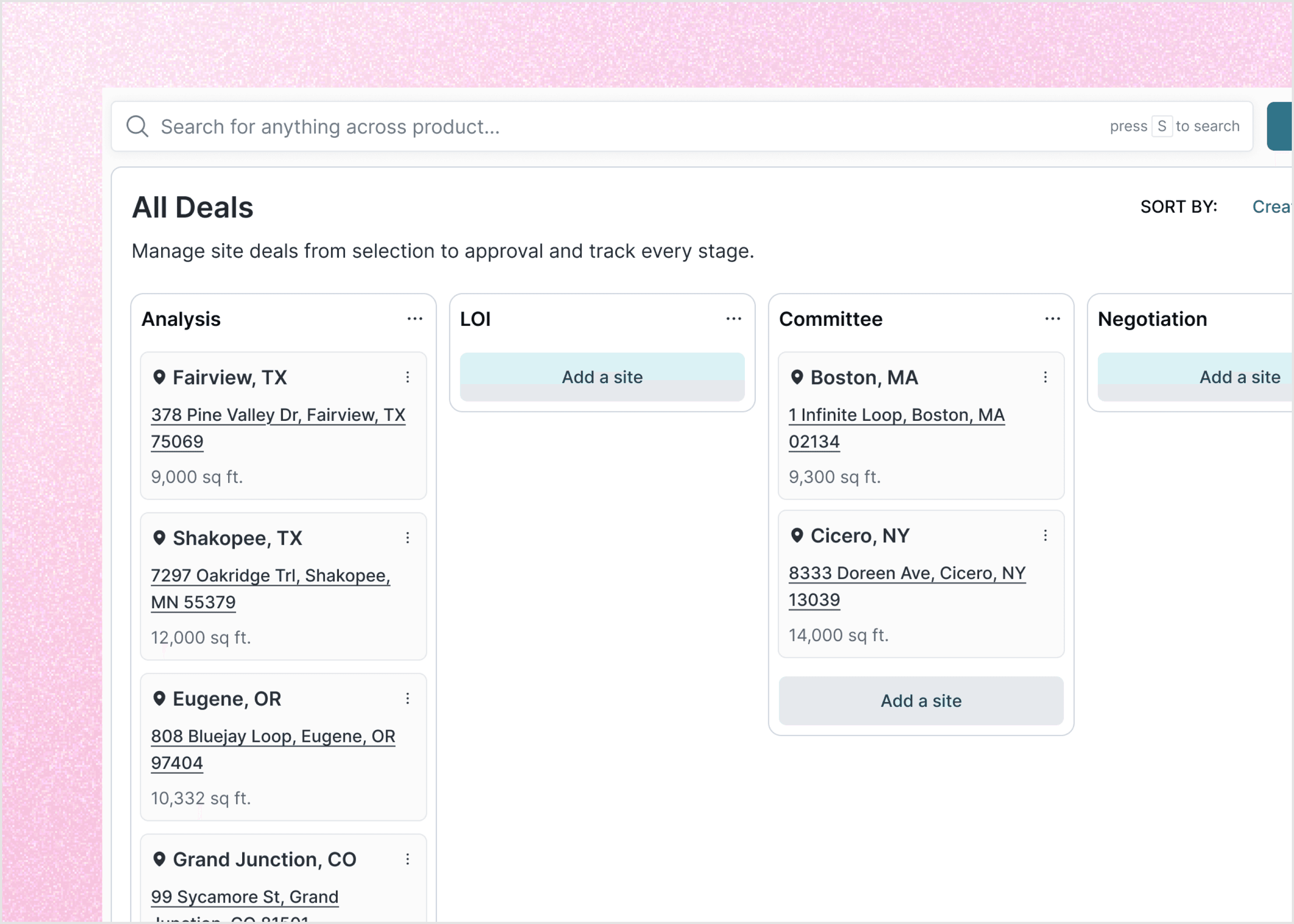
See how I designed the Deal Management & Lease Engines That Power Retail Growth