Solving Fragmented Lease Workflows: Designing a Unified System & Intelligent (NLP) Assistant
role
Founding Designer
Collaborated with
Engineers, CPO, CEO
Timeline
Mar 2025 - Apr 2025
Project Summary
I designed a Lease Management system that serves as a central hub for all signed leases. The system uses NLP to instantly extract key data points, turning static documents into actionable information. This design reduces cognitive overload and empowers agents to move faster, ensuring they can easily track, manage, and act on their lease portfolio without ever losing context.
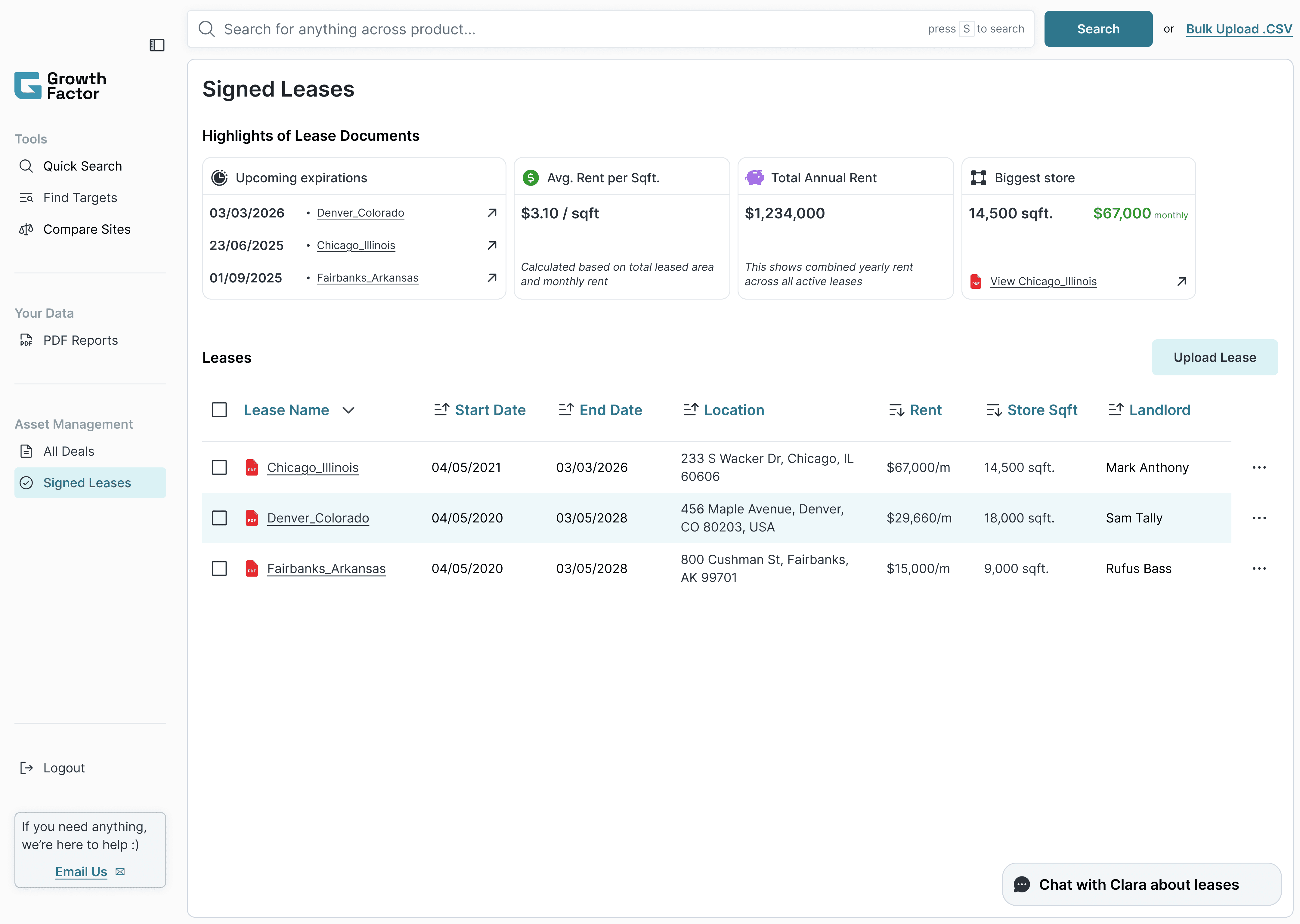
Fig: Final design I shipped
PROBLEM
Burden of disconnected Information
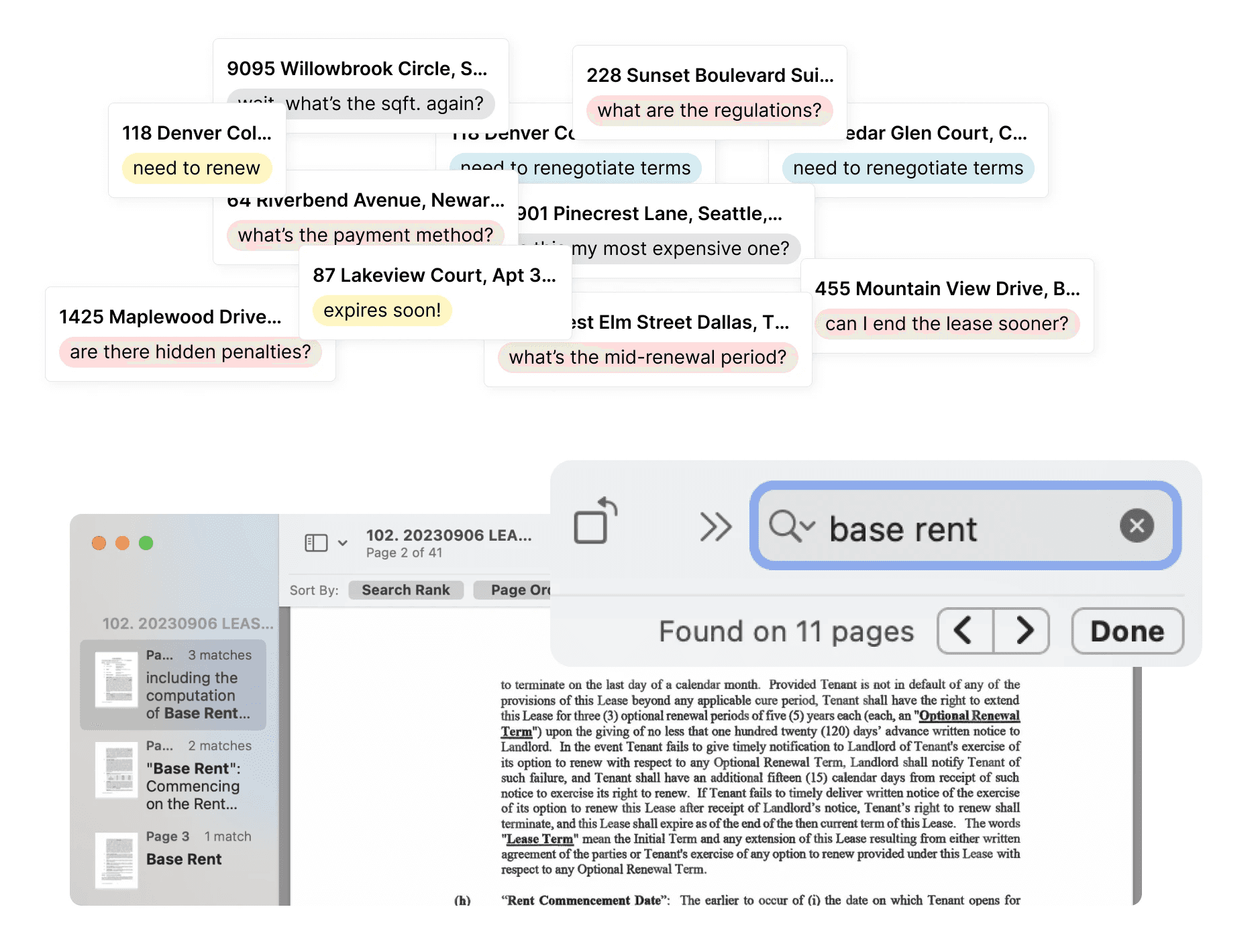
Users were painstakingly storing and manually searching through lease documents on their local devices. Existing PDF search tools were ineffective, providing only keyword counts rather than intelligent, summarized answers.
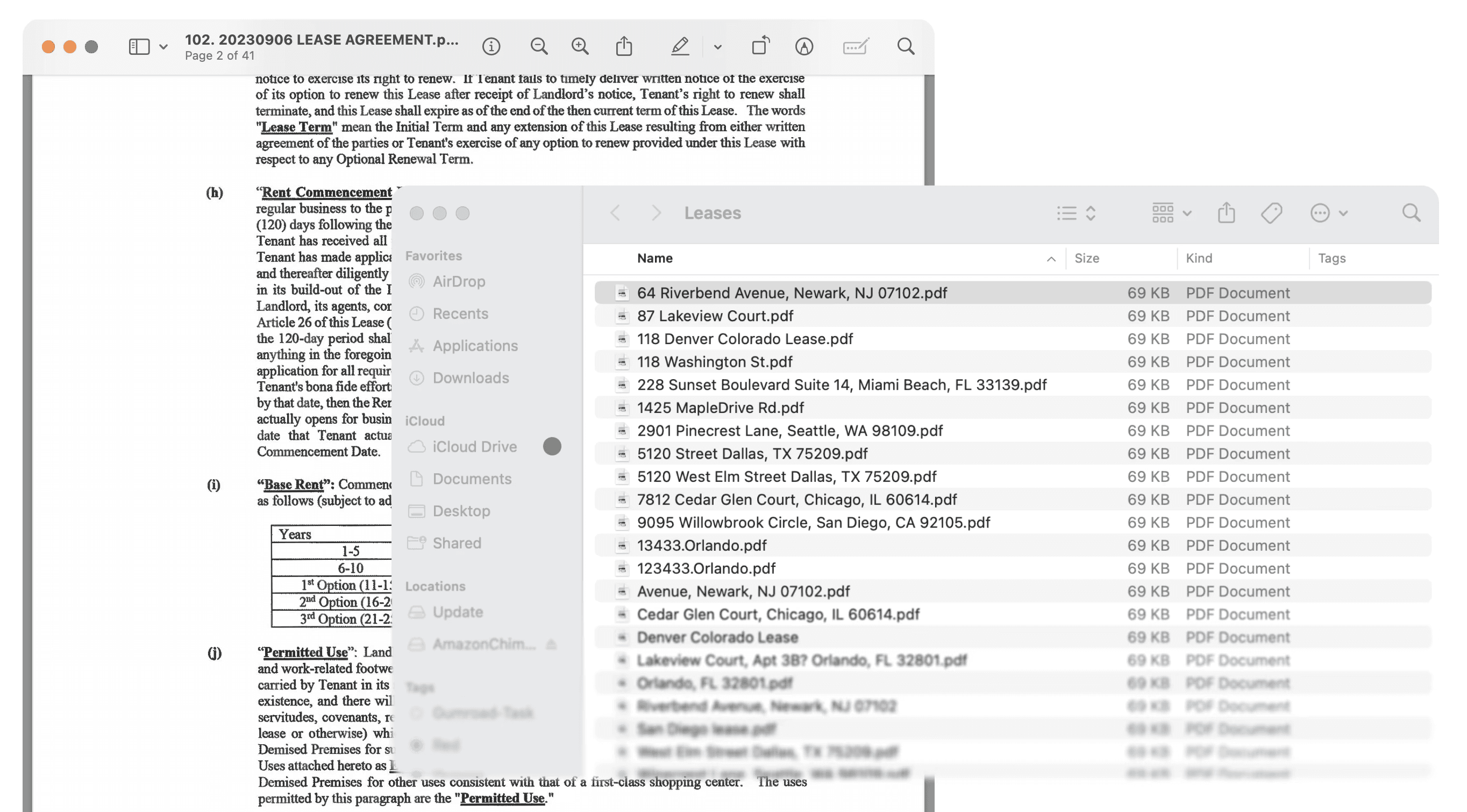
Fig: The grim reality of manually searching 160+ documents and storing them locally.
Putting it in numbers perspective…
"If I have 10 questions per lease document, and each document is 80+ pages, and I have 160+ lease documents... can I quit right now?" was our user's journey.
The Big Picture
The core issue was a fragmented workflow. Users were already evaluating sites on the platform, but the subsequent lease management was a disconnected, manual process, causing significant cognitive load and inefficiency.
sOLUTION 1
Dashboard
I designed a dashboard to transform complex lease data into an at-a-glance overview.
This approach reduces cognitive load by prioritizing urgent information and providing a foundation for a more detailed table view. The goal was to streamline lease management by creating an intuitive experience that empowers users to make data-informed decisions without extensive searching.
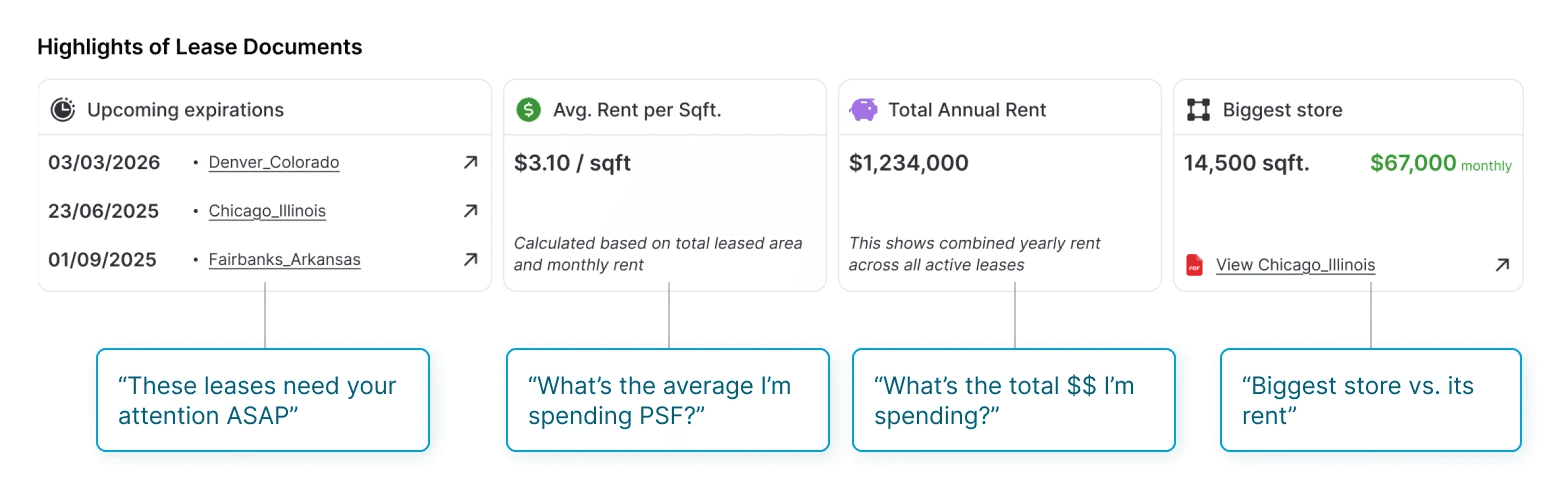
Fig: The highlight cards in the dashboard and the questions they answer for the user
sOLUTION 2
Clara: Integrated Intelligent Assistant
Designing the dashboard helped with management of humungous amount of data. Now, what about the data retrieval inside each 90 page document?
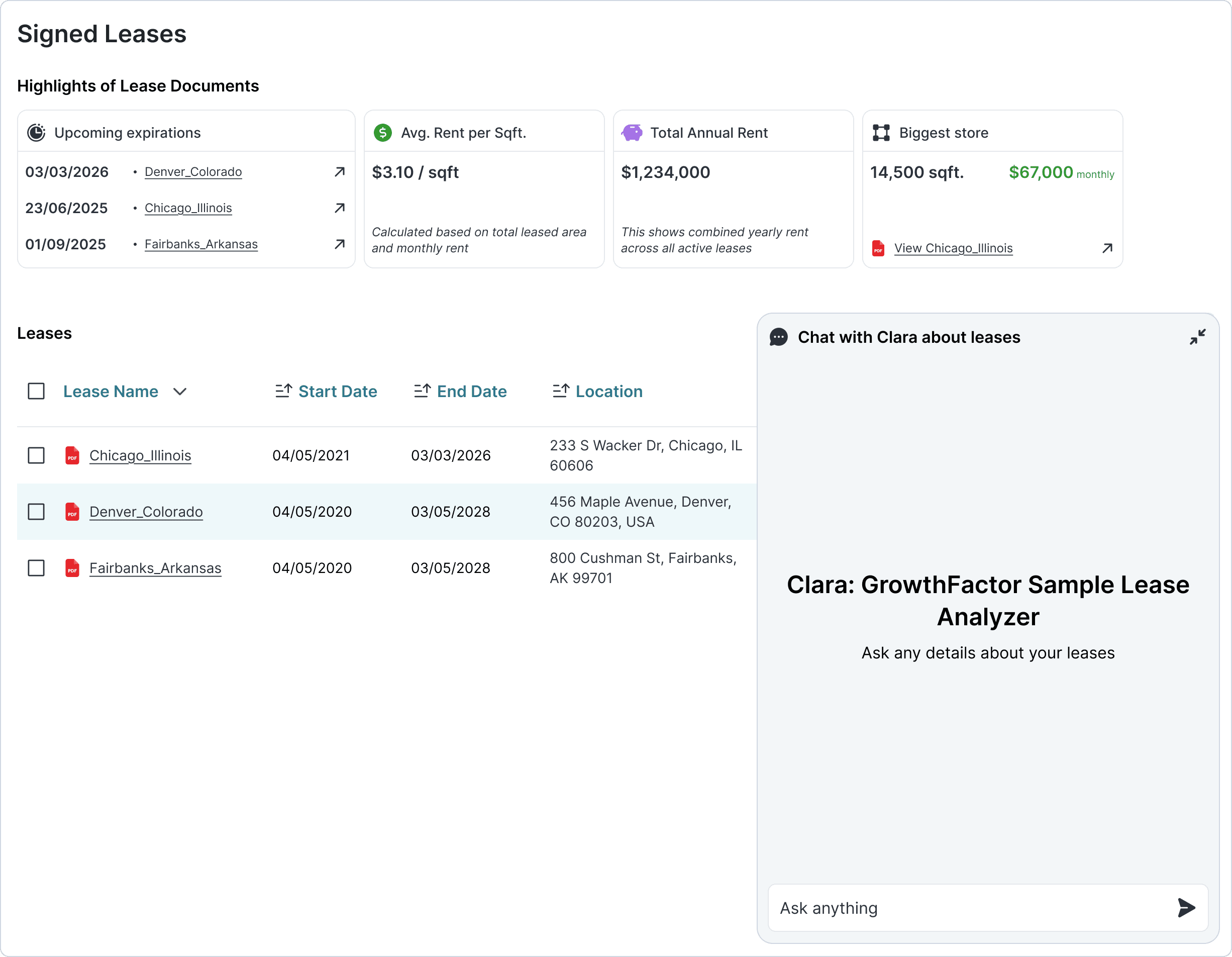
Fig: State 1: While on Home Page (i.e. the Lease Management page), Clara answers any question about all leases

Fig: State 2: While inside a specific lease, Clara answers specifically questions related to that lease
process
Beyond "Just another chat interface"
The core purpose of Clara was to do more than just provide answers; it was to give users back their time. We knew that even the most accurate AI response wouldn't be enough, as users need to verify information for themselves.
My design philosophy was built on this understanding. Instead of simply saying, "Here is the answer," the system was designed to provide a direct link to the source document. This empowers users to cross-verify any information, saving them the headache of a manual search and building trust by making sure it's earned, not assumed.
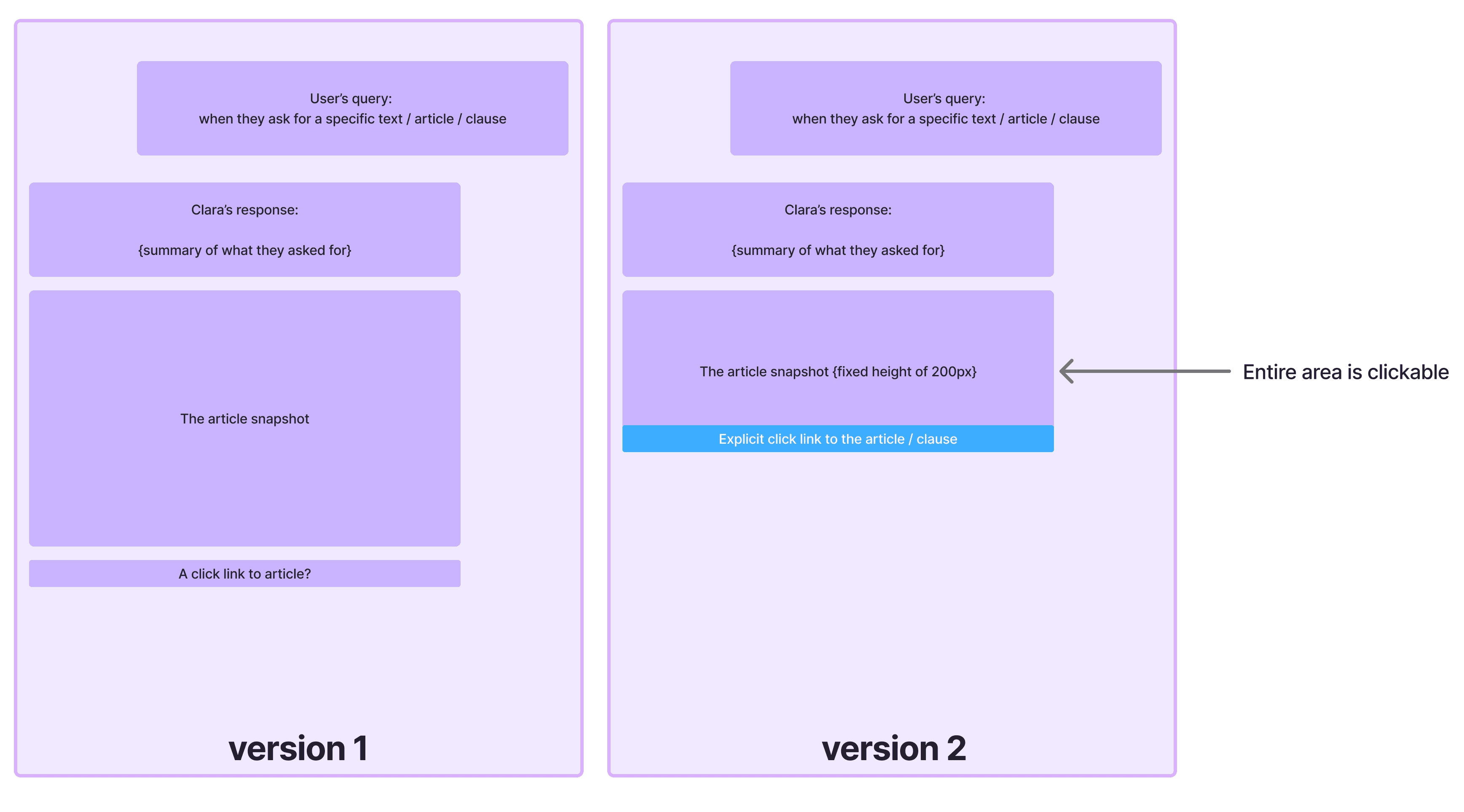
Fig: Versions I thought of before going with the version 2. I chose version 2 because: The 'Snapshot' being clickable is more prominent
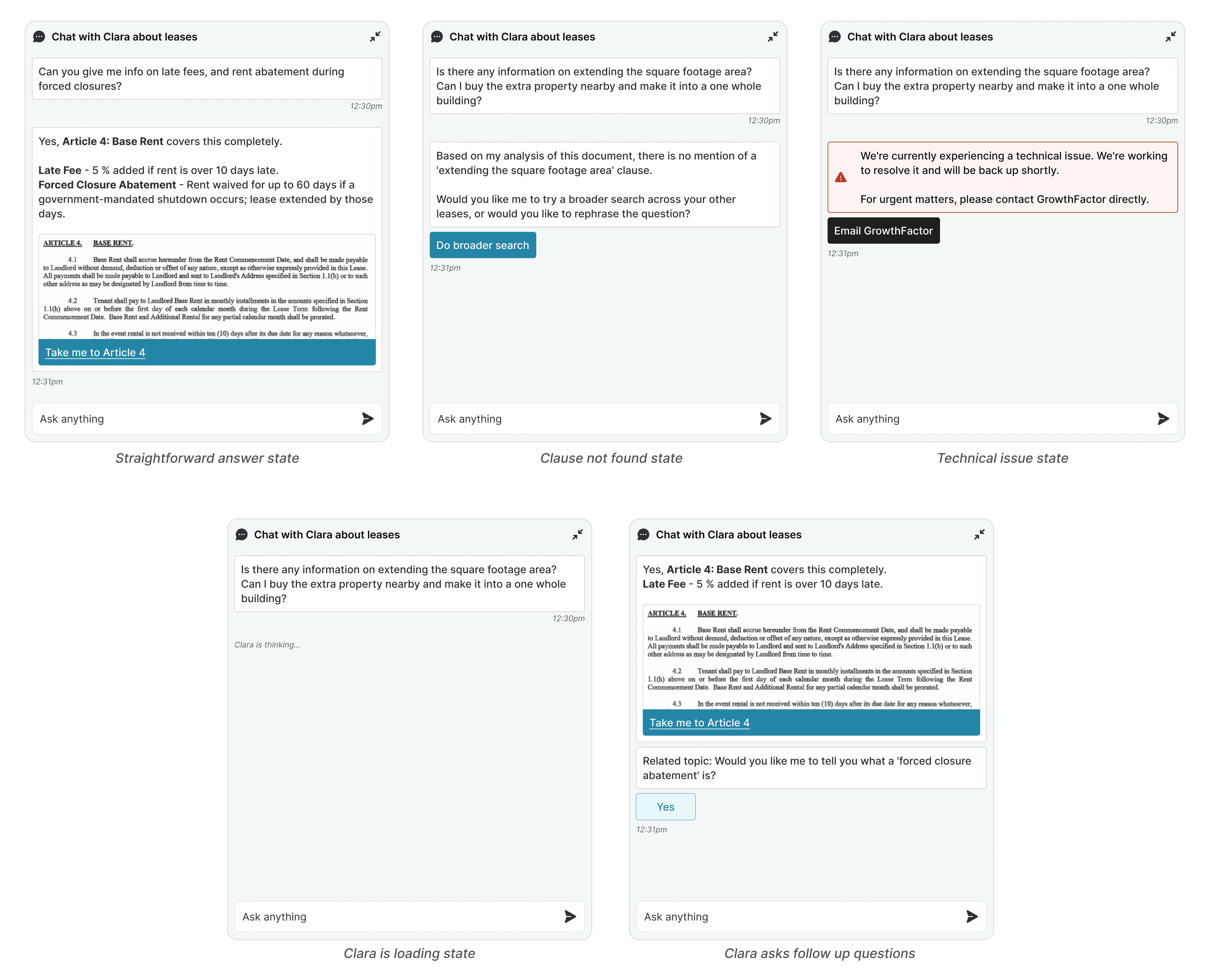
Fig: Different states of Clara
reflection
Key Learnings
This project has been an invaluable learning experience, reinforcing my belief that the most impactful products are those that not only solve a user's problem but also empower them with trust and control.
During my time on the team, we successfully designed and validated Clara, defining its core functionality and states to handle a variety of user needs, including complex queries and system errors. The project has been handed off for engineering.
Roadmap
Looking ahead, our next steps will involve monitoring user adoption and collecting feedback to inform future iterations.
We plan to expand Clara's capabilities to include automatic alerts for contract renewals and to integrate with a company-wide knowledge base.
product's big picture
This Feature's future
I designed Clara not as a one-off feature, but as a strategic component for the product's future. By ensuring a cohesive integration with the dashboard and other tools, this approach guarantees the product can evolve seamlessly.
The goal was to transform a single-use chat into an indispensable part of the user’s workflow, ready to support future capabilities like automated alerts and proactive insights.
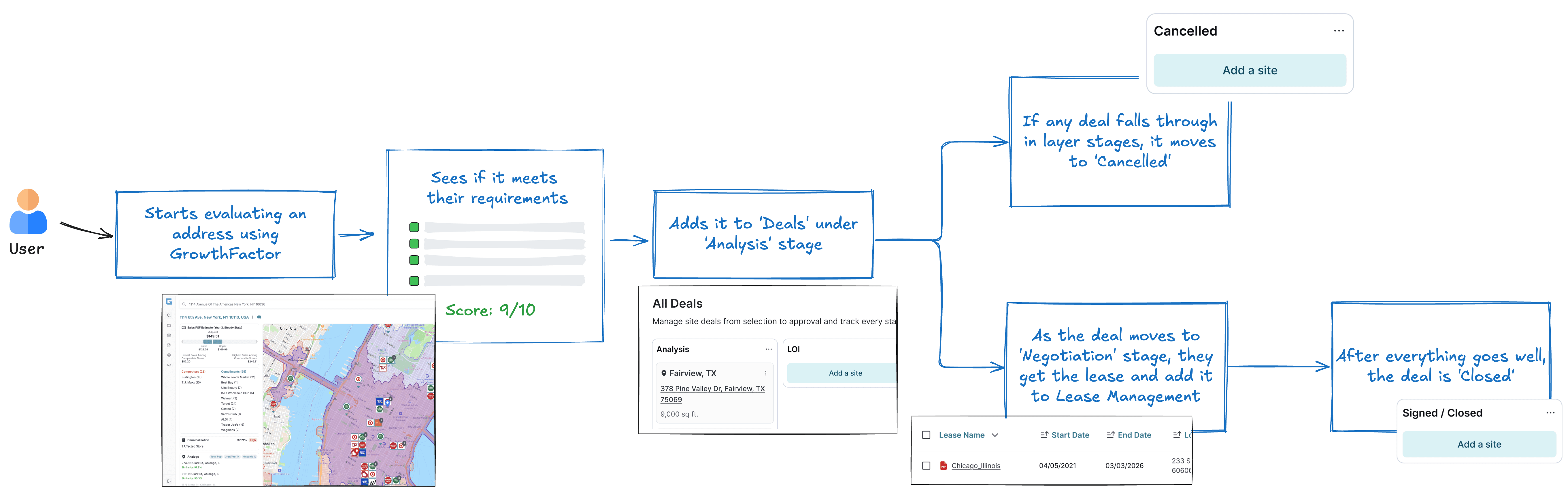
Fig: Building this entire flow for GrowthFactor, literally taking it from 0 to 1, is the highlight of my life.
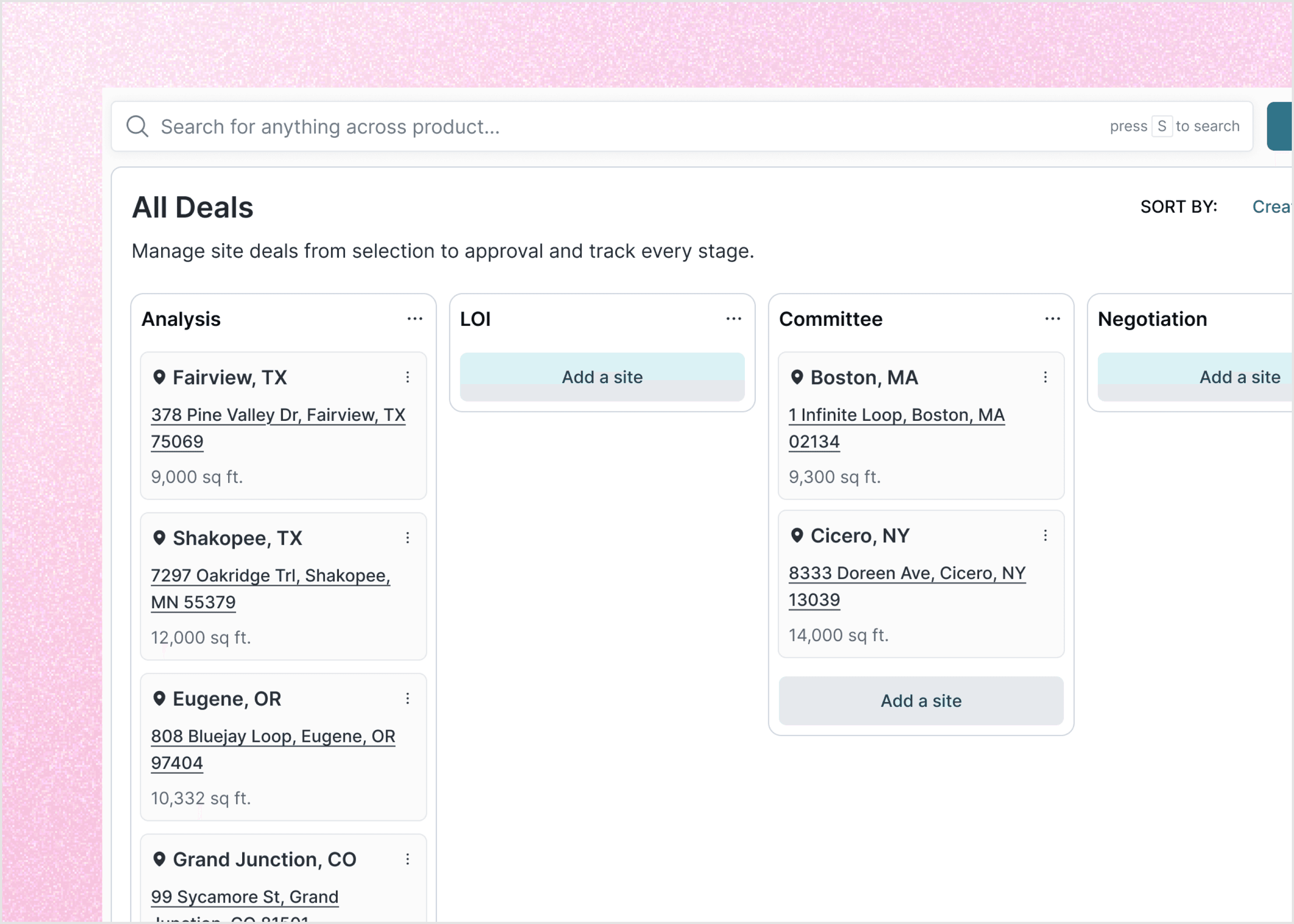
See how I designed the Deal Management & Lease Engines That Power Retail Growth